Blog Overview
A fire marshal is a trained staff member responsible for supporting workplace fire safety before, during and after an emergency. Their duties typically include identifying fire hazards, checking escape routes, supporting evacuation procedures, assisting staff and visitors in reaching assembly points, and promoting fire safety awareness throughout the workplace.
In most UK workplaces, fire is a rare but serious risk. While all staff should receive basic fire safety training, many businesses also appoint trained fire marshals to provide extra fire safety support.
Within this role, staff members help maintain day-to-day workplace fire safety. They may do this by supporting evacuation procedures or by helping identify fire hazards before they escalate. In many organisations, the terms fire marshal and fire warden are used interchangeably, although some businesses define the role slightly differently.
Whether you manage a small office, a busy warehouse or a customer-facing site, understanding fire marshal responsibilities is an important part of maintaining compliance and protecting people.
In this guide, we’ll explain:
- what a fire marshal is
- what fire marshal duties typically involve
- how many fire marshals you may need
- what training is usually required
- how often fire marshal training should be refreshed

Get a Fire Safety Training Quote
What Is a Fire Marshal?
A member of staff who has been given additional fire safety responsibilities and received suitable training to support others during an emergency. In many workplaces, the role is also referred to as a fire warden.
In most cases, this is not a full-time job title. Instead, it is an additional responsibility assigned by the employer or responsible person to someone who can help maintain workplace fire safety and respond calmly in the event of a fire.
Crucially, the role is not limited to what happens during a fire. Fire marshals also help maintain day-to-day fire safety by:
- spotting potential hazards
- supporting fire drills
- checking escape routes and signage
- reinforcing emergency procedures
- helping build fire safety awareness across the workplace
What Is a Fire Marshal Responsible For?
A fire marshal is responsible for helping maintain a workplace’s fire safety and supporting people during an emergency.
In practice, this usually includes:
- identifying fire hazards
- checking escape routes and fire safety signage
- supporting emergency procedures
- helping staff and visitors evacuate safely
- reporting fire safety concerns
- reinforcing fire safety awareness
- updating the fire safety logbook
If a small fire can be tackled safely and the fire marshal has received practical fire extinguisher training, they may be able to use the correct equipment. However, they should never be a hero. Keeping themselves safe should always come first, and, therefore, evacuation must remain the priority.

Key Fire Marshal Responsibilities in the Workplace
While exact responsibilities vary by workplace, promoting proactive workplace fire safety is core to the role.
Now, let’s take a closer look at what these fire marshal duties typically entail.
Identifying fire hazards and reporting risks
A key part of the role is helping to spot fire hazards before they become serious risks. In other words, good fire safety often starts long before an alarm sounds.
For example, a fire marshal may help identify:
- blocked fire exits or obstructed corridors
- damaged or missing fire safety signage
- overloaded sockets or trailing cables
- poor housekeeping that increases fire risk
- unsafe storage of combustible materials
In many workplaces, these are the kinds of small issues that can easily be overlooked during a busy day.
It is important to note that a fire marshal is not a substitute for a qualified fire risk assessor. However, they can help identify issues that should be raised as part of a wider fire risk assessment and reported to the responsible person.
Supporting emergency procedures and evacuation
During an emergency, fire marshals help people respond quickly, calmly and safely. Because panic can spread fast, clear leadership is often one of the most valuable parts of the role.
Depending on the workplace, these duties during a fire may include:
- raising the fire alarm
- directing staff and visitors to the nearest fire safety exit
- reporting key information to the responsible person or emergency services
- guiding people to the assembly point
- following emergency procedures
Additionally, if the workplace has staff or visitors with mobility needs, fire marshals should also understand the relevant evacuation procedures. However, it is important to remember that using evacuation chairs or evacuation mats requires separate practical training and should not be assumed as part of basic fire marshal training.
During OHEAP Fire & Security’s fire marshal course, delegates receive practical fire extinguisher training. This teaches them to safely use both a CO2 and a water fire extinguisher. Therefore, if a fire is small and contained, the fire marshal may be able to use the correct equipment. That said, they should never put themselves at risk. If the fire is spreading, smoke is building or visibility is poor, evacuation should remain the priority.
Checking escape routes and fire safety equipment
Smoke can reduce visibility very quickly during a fire, which is why clear escape routes matter.
As part of their day-to-day responsibilities, fire marshals may carry out basic visual checks to make sure that:
- fire exits are not blocked
- access routes remain clear
- assembly point routes are usable
- fire safety signage is visible and undamaged
They may also report obvious issues with accessible fire safety equipment, such as missing extinguishers or damaged call points. However, formal inspection, servicing and maintenance should still be carried out by competent professionals where required.
Helping maintain workplace fire safety awareness
Fire marshals do more than react during emergencies. Just as importantly, they can help reinforce good fire safety habits across the workplace.
This may include:
- reminding staff of evacuation routes
- supporting routine alarm tests
- encouraging safe day-to-day behaviour
- flagging recurring housekeeping issues
- helping staff understand site-specific emergency procedures
For example, people often try to leave through the same door they used to enter a building, even if a safer exit is closer during an emergency. Regular reminders and fire drills can help reduce hesitation and improve evacuation behaviour.
Assisting during fire drills and post-incident reviews
Fire drills are a key part of workplace fire safety because they help staff practise the correct response before a real emergency happens.
Fire marshals can support drills by:
- checking their area, where applicable
- directing people to the assembly point
- helping ensure evacuation routes are followed
- reporting delays or confusion afterwards
By training staff to know exactly where to convene during a fire, it streamlines evacuation and helps remove any confusion. Fire marshals can also assist during fire drills by doing post-evacuation sweeps to ensure everyone has safely evacuated the building.
Fire Marshal Duties UK: What Does the Law Say?
Are fire marshals a legal requirement in the UK?
Yes, under the Regulatory Reform (Fire Safety) Order 2005, it is a UK legal requirement for businesses to appoint and train fire marshals within the workplace. If a business fails to provide evidence of trained fire wardens, they can receive hefty fines and prison time.

How Many Fire Marshals Should There Be in Your Workplace?
There is no fixed legal number of fire wardens required in every workplace. The right number depends on the size, layout and risk profile of the building, as well as how the site is used day to day.
In practice, the right number often depends on:
- building size and complexity
- number of employees
- multiple floors or separate areas
- shift patterns
- public access or visitors on site
- higher-risk zones
- holiday, sickness or absence cover
For example, a small single-floor office may only need a limited number of trained fire marshals. By contrast, a large multi-floor office, warehouse or public venue may need several trained staff to ensure all occupied areas and shifts are properly covered.
As a general rule, businesses should have enough trained cover to support all occupied areas, all working shifts and any foreseeable absences. To provide further clarity, a fire risk assessment can be conducted to correctly determine how many fire wardens are needed.
What Training Does a Fire Marshal Need?
Both basic fire safety training (which can be either online or in-person) and the additional in-person fire marshal module.
What does a fire marshal training course usually cover?
At OHEAP, the Fire Training Academy offers a 2-hour-long fire marshal training course that encompasses both theoretical, classroom-based learning and practical, hands-on training.
The course begins by building the foundational theoretical skills:
- fire safety signage training
- common workplace hazards
- customer and site evacuation procedures
- understanding the fire triangle and the main classifications of fire
- extinguisher awareness
Once the theory has been taught, the course moves on to training the delegates how to safely deploy CO2 and water fire extinguishers and fire blankets onto live, contained fires.
Who can be a fire marshal at work?
Anyone within the workplace can be trained to become a fire marshal. The person, however, is typically appointed by the responsible person (the business or building owner).
How Often Should Fire Marshal Training Be Renewed?
Typically, training is renewed every 1 to 3 years.
There is no single UK legal requirement for how often a fire marshal should be trained. However, many businesses are advised to renew training more regularly to compensate for:
- risk level
- staff turnover
- building changes
- incident history
- internal policy
Similarly, training should also be reviewed whenever the workplace changes significantly. For example, if escape routes are altered, new hazards are introduced, or the business expands into new areas. Ultimately, refresher training can help ensure everyone remains confident and up to date.
Get a Fire Safety Training Quote
FAQs About Fire Marshal Training
What do fire marshals do?
They help maintain workplace fire safety, identify hazards, support fire drills, and assist with emergency evacuations.
What is a fire marshal responsible for?
Helping maintain day-to-day fire safety by supporting emergency procedures and helping building occupants to evacuate safely if a fire occurs.
How often should a fire marshal be trained?
In many workplaces, refresher training is recommended every 1 to 3 years. This can be sooner, however, if the building layout, procedures or risk profile changes.
How many fire marshals are required by law in the UK?
There is no universal legal number that applies to every workplace. The right number depends on the size, layout and risk level of the premises, as well as staffing levels and shift patterns.
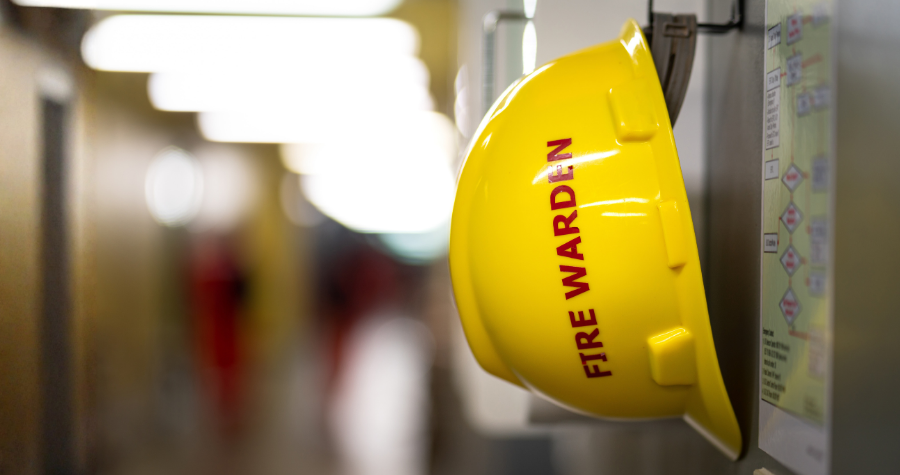
Final Thoughts: Why Fire Marshals Matter for Workplace Fire Safety
Fire marshals play an important role in workplace fire safety because they help turn fire procedures into practical action.
From spotting hazards and supporting drills to guiding people during an evacuation, they provide reassurance when quick decisions matter most. More importantly, they help businesses move beyond box-ticking compliance and build a safer, more prepared working environment.
With the right training and regular refreshers, fire marshals can help strengthen emergency preparedness, improve confidence during evacuations, and support a more effective fire safety culture across the workplace.