Blog Overview
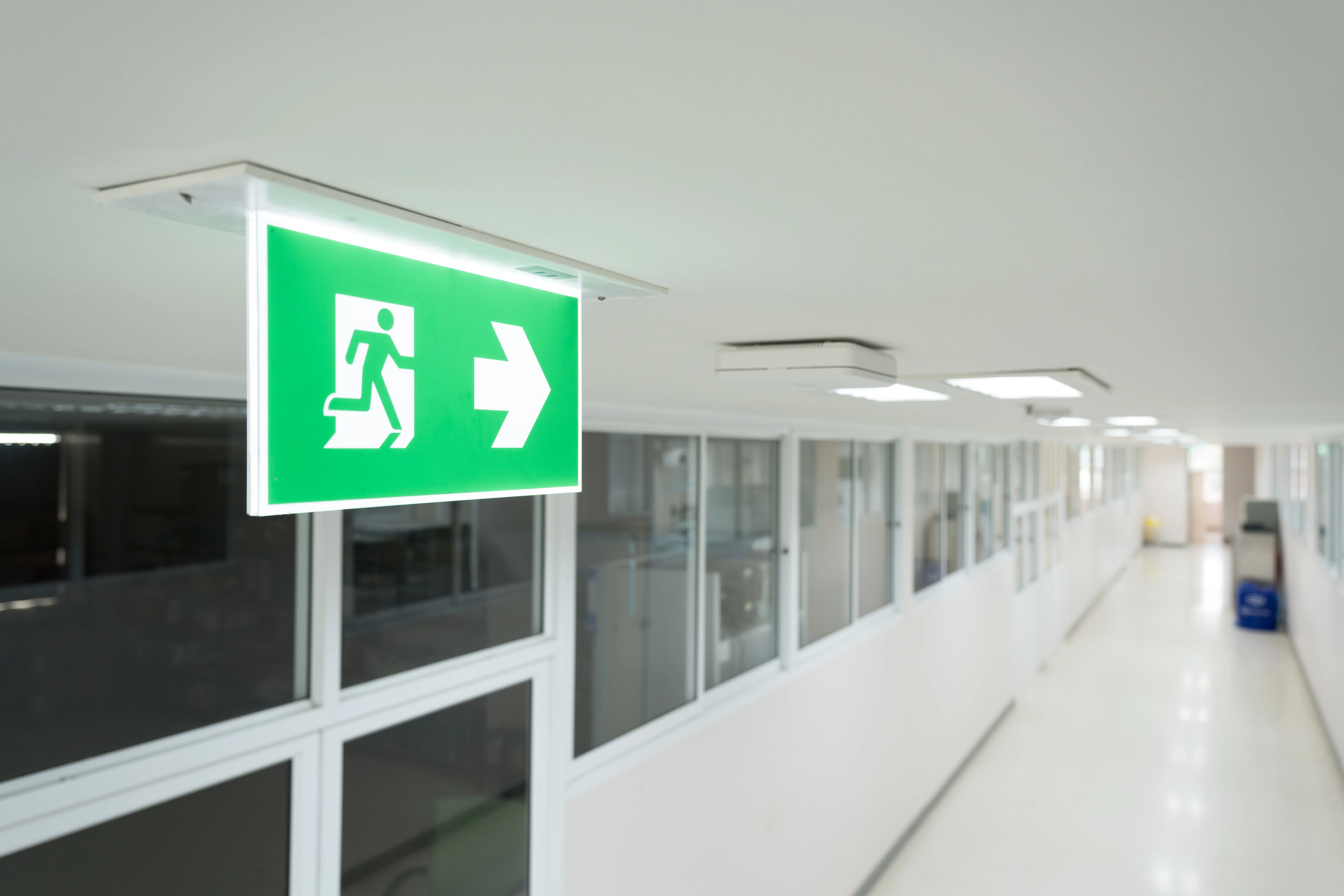
School emergency lighting is a UK legal requirement under the Regulatory Reform (Fire Safety) Order 2005, supported by British Standard BS 5266. The purpose of emergency lights in schools is to:
- Protect students and staff during blackouts.
- Illuminate guidance towards emergency exits.
- Reduce the chance of panic or injury in high-risk areas.
Through both regular, monthly testing and annual servicing, emergency lighting can continue to provide vital visibility for schools.
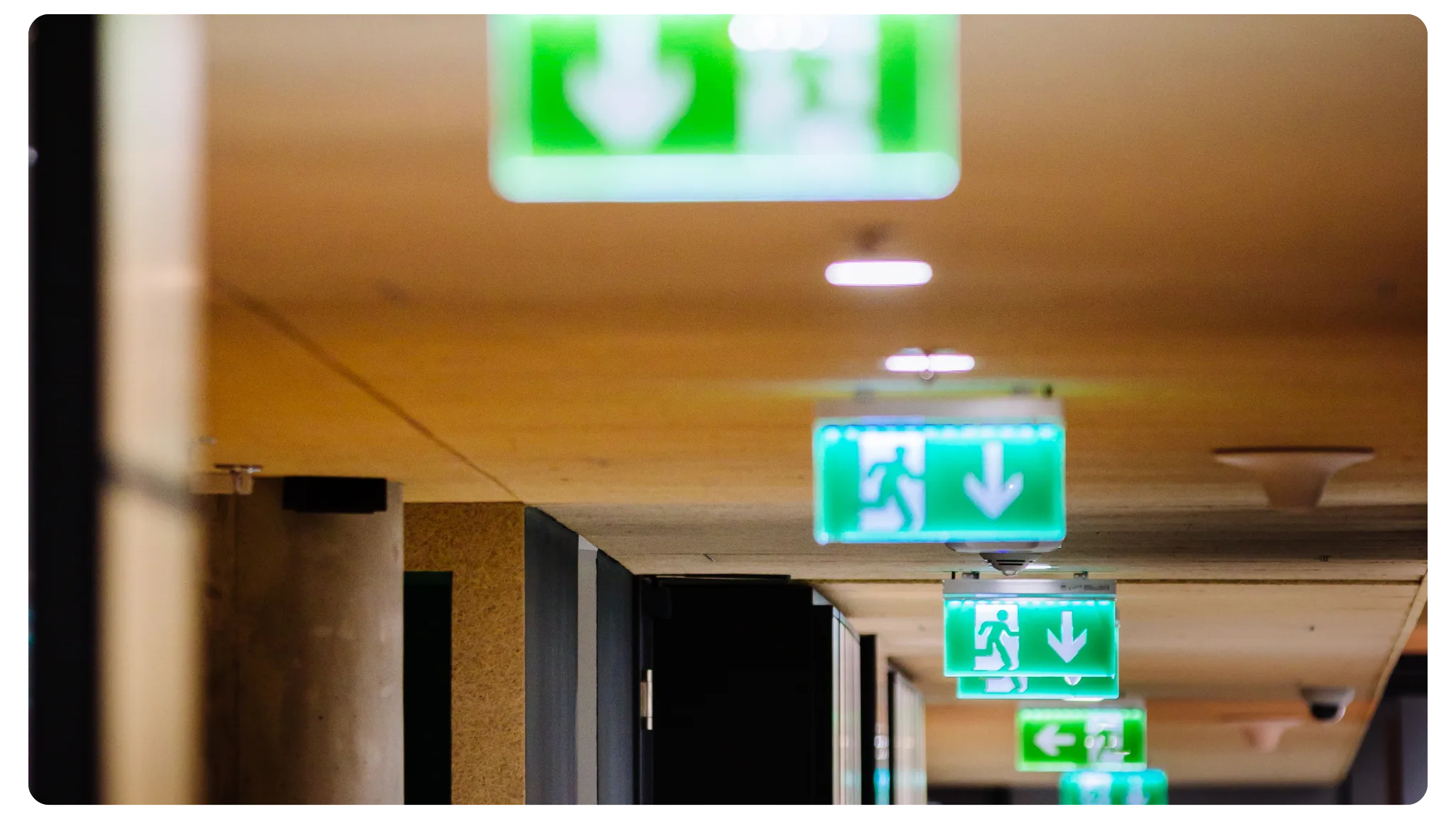
Why School Emergency Lighting Matters
In a school environment, safety is paramount. Power cuts or fire-related blackouts can instantly turn hallways and stairwells into dangerous obstacles. School emergency lighting ensures clear visibility, helps guide students and staff to emergency exits, and reduces panic or injury during emergencies.
Get an Emergency Lighting Quote
Is Emergency Lighting a Legal Requirement in Schools?
Yes. Emergency lighting is a legal requirement under the UK fire safety regulations:
- The Regulatory Reform (Fire Safety) Order 2005
- British Standard BS 5266
These standards ensure that all schools maintain adequate emergency lighting throughout the premises.
Why Are Emergency Lights Provided to Schools?
Emergency lighting provides schools with a constant, reliable source of visibility and directs staff and students safely to exits.
Fires or power failures can happen without warning. When the lights go out:
- Students may become disoriented or separated from staff.
- Smoke and flames can obscure escape routes.
- Staff working after hours are at greater risk during the darker months.
Ultimately, emergency lighting acts as an essential backup source of light to guide others to safety.
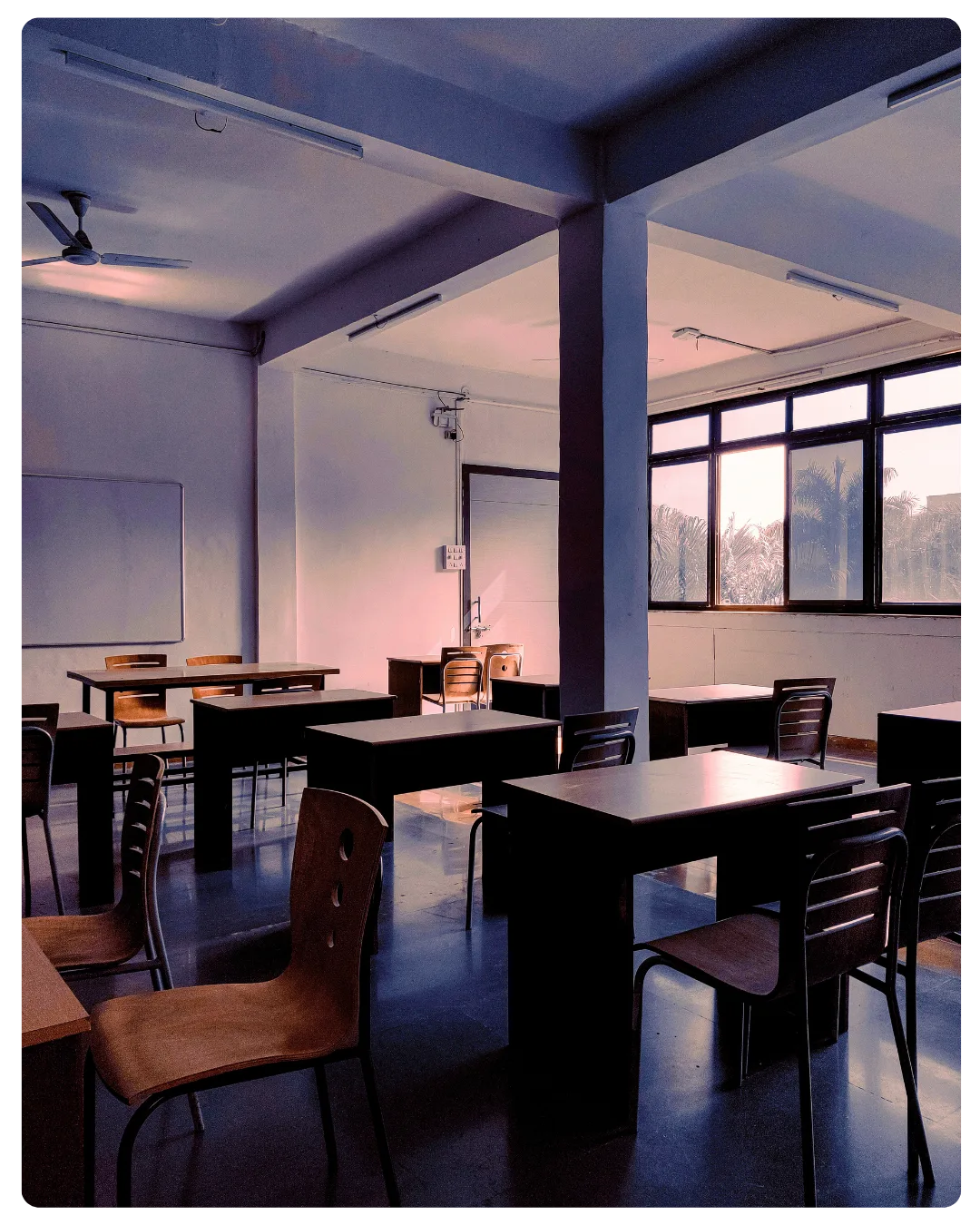
Where Should School Emergency Lighting Be Installed
School emergency lighting should be installed in key, high-risk areas:
- Escape routes
- Corridors
- Classrooms
- Storage areas
- Stairways
- Near exit doors
Professional Tip: Fire safety equipment must always be tailored to fit the environment. To achieve compliant emergency lighting that maximises school fire safety, we recommend arranging a professional fire risk assessment.
In doing so, the fire safety expert can identify any gaps within your school’s fire safety and offer actionable steps towards fixing them.
Maintaining and Testing Emergency Lighting
Regular testing and servicing are vital to ensure they don’t fail when you need them the most. UK fire safety regulations require both monthly emergency lighting testing and annual professional servicing.
Who Should Test School Emergency Lighting?
The responsible person should conduct regular emergency lighting testing and an accredited professional should conduct in-depth servicing.
It is the responsible person’s legal duty to ensure that school fire safety is being maintained to a high standard, as illustrated within UK compliance.
However, all emergency lighting also requires annual in-depth testing by a certified professional. Again, it is the responsible person’s duty to arrange this. OHEAP offers emergency lighting servicing for in-depth assessment.
To find out how to test emergency lighting, see below.
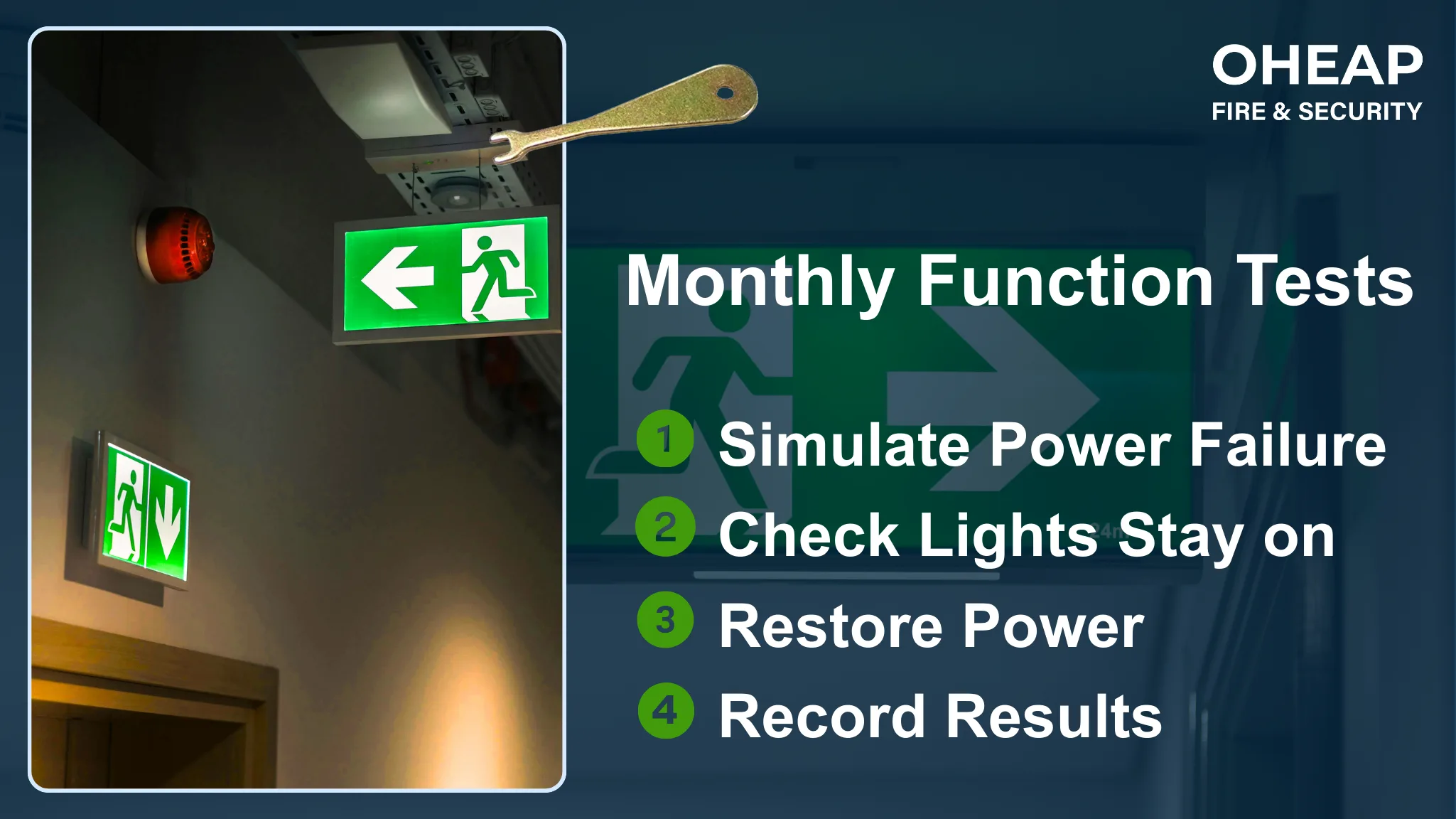
How to Test Your Emergency Lights
- Simulate a mains power failure with a lighting test key
- Check that all emergency lighting remains switched on
- Restore power, checking that emergency lights are working effectively
- Record results for future assessment/review.
How Often Should School Emergency Lighting Be Tested?
There are two types of emergency lighting tests:
- Monthly Function Test (or flick test): Conducted by the responsible person to confirm operation and placement.
- Annual Full Duration Test: Conducted by an accredited professional to ensure compliance and battery performance over three hours.
Monthly Lighting Tests
Monthly function tests combine visual inspections with record keeping. They are conducted in four steps:
- Simulate a mains power failure.
- Check that all emergency lights and exit signs illuminate correctly.
- Restore power and confirm charging indicators.
- Record results in the logbook.
Annual Lighting Tests
Annual emergency light servicing tests all lights by simulating a power cut (generally lasting around three hours) and checking that the lights continue to provide visibility without faltering. The accredited professional conducts them by:
- Simulate a full power failure.
- Verify all fittings stay lit throughout.
- Replace or repair any fittings that fail.
- Record and sign off in the fire safety logbook.
Get an Emergency Lighting Quote
Conclusion: The Services OHEAP Offers
OHEAP is committed to providing the highest standard of school fire safety services. Our accredited engineers design, install, and maintain emergency lighting systems that keep your school safe and compliant.
Contact OHEAP today to book an equipment inspection or servicing to ensure your school remains fully compliant with UK fire safety regulations.