Blog Overview
Kitchen fire suppression systems deliver active fire protection instantly for commercial kitchens.
What is a Kitchen Fire Suppression System?
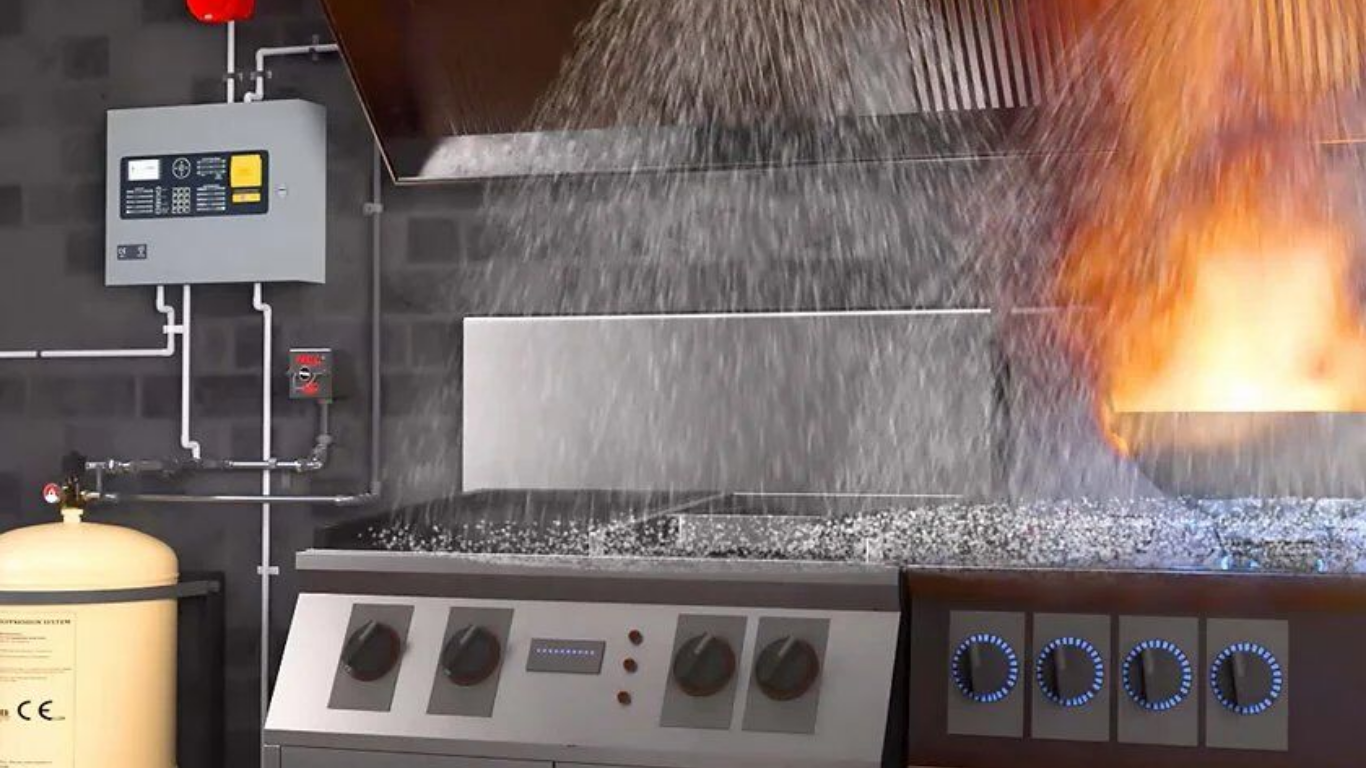
A kitchen suppression system is an automatic fire safety measure designed for high-risk cooking areas such as fryers and grills.
Here’s how it works in an emergency:
- A wet chemical agent is released directly onto burning oils and fats.
- The agent cools and smothers the flames, preventing reignition.
- Gas and electricity are automatically shut off, reducing further risk.
The result? Fires are controlled in seconds, keeping staff safe and minimising disruption to your business.
How Do Kitchen Suppression Systems Work?
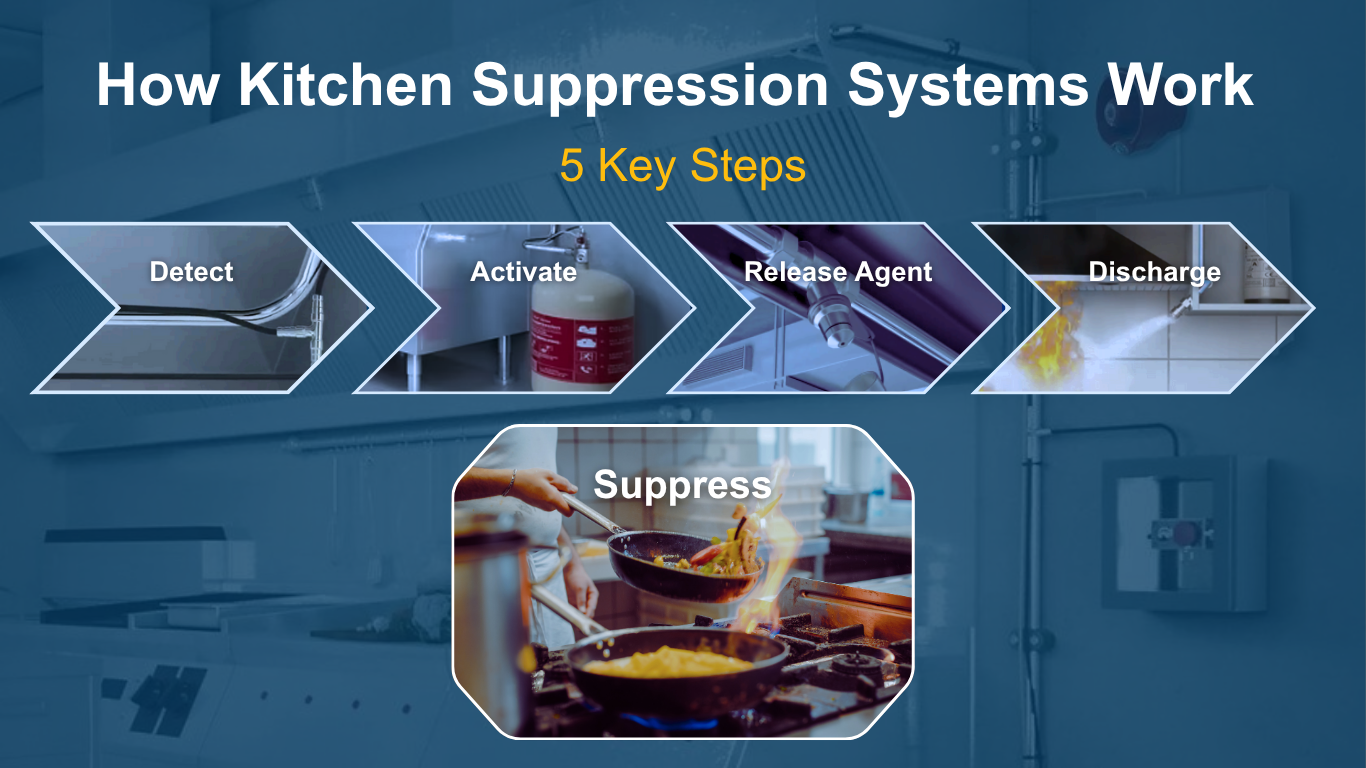
Kitchen fire suppression systems essentially work in 5 steps:
- Fire Detection: Heat Sensing Tube detects fire at around 150-180°C
- Automatic Activation: Tube bursts releasing the stored pressure, triggering the indirect low-pressure valve to open
- Agent Release: Extinguishing agent flows through the distribution pipe network to the nozzles
- Discharge: Nozzles positioned over the risk area deliver targeted suppression coverage
- Fire Suppression: Foam blanket covers the oil surface, smothering the flames and cooling the oil below ignition point.
Automatic vs Manual Suppression: How Are They Triggered?
Kitchen suppression systems can activate in two ways:
- Automatic: heat-sensitive bulbs break, instantly releasing the agent.
- Manual: staff pull a safety switch to trigger the system in an emergency.
This dual approach ensures fires can be controlled whether or not the automatic sensor has activated.
Where Should They Be Installed?
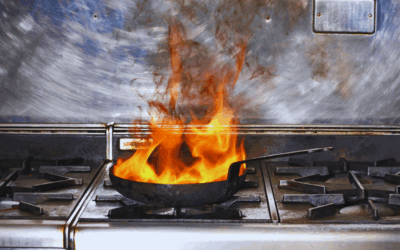
A common misconception is that commercial kitchens are only in restaurants. The reality? Non-domestic kitchens are everywhere. Hotels, schools, food trucks, universities, markets, and care homes all use cooking oils and open flames. That makes them vulnerable to Class F fires.
Investing a kitchen fire extinguisher is an essential step to protecting your non-domestic kitchen. Alongside this, installing an automatic suppression system:
- Removes the risk of human error (unattended pans or delayed response).
- Reaches difficult areas within hoods, ducts, and over equipment.
- Provides 24/7 protection, even when staff aren’t nearby.
If your venue uses fryers or hot oils, our fire safety experts strongly recommend an LPCB-approved system for maximum reliability and compliance.

Types of Kitchen Suppression Systems Available
Water Mist Fire Suppression Systems
These systems use ultra-fine droplets to cool, displace oxygen and suppress flames.
Water Mist Benefits
- Minimal water is used to reduce collateral damage
- Instantly cools and suppresses the affected area
- Nontoxic to stop surfaces from corroding and ensure the extinguishing agent is safe to touch
Water Mist Limitations
- Less effective on deep fat fryer fires than wet chemicals.
- Requires a precise nozzle design and sometimes higher water pressure.
Wet Chemical Fire Suppression Systems
Wet chemical suppression works through saponification. This process means that the agent reacts with burning oil to form a soapy foam that smothers flames and prevents reignition.
Wet Chemical Benefits
- Extremely effective for grease/oil fires.
- Rapid knockdown and reliable reignition prevention.
Wet Chemical Limitations
- Only suitable for cooking oil and grease fires.
- Requires cleanup of chemical residue after discharge.
What Makes Ceasefire’s Wet Chemical Suppression Systems Special?
Traditional wet chemical agents can corrode equipment and cause extra downtime. Ceasefire systems take a safer approach:
- PFAS and PFOA-free: Ceasefire wet chemical suppression systems are environmentally safe.
- Green Seal certified: these suppression systems are verified by Green Seal, reinforcing that they are eco-friendly and safe to touch.
- Dielectrically tested: Unlike water or other traditional wet chemical suppression systems, Ceasefire is safe to use near electrical equipment.
This means you get the same high level of protection without added risks to staff, equipment, or the environment.
UK Legal Requirements for Restaurant Fire Safety
While kitchen suppression systems aren’t yet a legal requirement in UK restaurants, two key regulations apply:
- The Regulatory Reform (Fire Safety) Order 2005 – Requires the responsible person to ensure fire safety measures are in place.
- The Building Safety Act 2022 – Strengthens accountability for fire safety in high-risk buildings.
For non-domestic kitchens using fryers, oils, and open flames, installing a suppression system is often the most effective way to stay compliant and reduce liability. Ultimately, though this decision to install suppression system comes down to the responsible person.
Easily Combinable Fire Safety Services
Fire safety isn’t one-size-fits-all. At OHEAP Fire & Security, we design integrated solutions that combine suppression with:
- Bespoke fire alarm systems: Bespoke design, installation and ongoing maintenance services.
- Fire risk assessments: Carried out by BS 8674:2025-qualified assessors.
- Routine maintenance: To keep every system ready for use.
Maintaining Your System
Your kitchen suppression system must be serviced annually by a qualified professional.
However, your equipment will also require regular maintenance. This comes in the form of quick daily checks. Our kitchen suppression system daily checklist breaks down routine checks into simple tasks.
Unable to tick a part of the checklist? Our expert engineers are just a phone call away.
Why Choose OHEAP Fire & Security?
- We design, install, and maintain LPCB-approved suppression systems.
- Our engineers are available around the clock.
- We support both new installations and takeovers of existing systems.
Talk to our team today about installing or maintaining your kitchen suppression system and protect your restaurant fire safety.