Blog Overview: Local company severely fined for breaching fire safety standards
A fire alarm engineering company was recently investigated after failing to meet fire safety standards in a care home. Their breaches of the Regulatory Reform (Fire Safety) Order 2005 led to costly fines which were exacerbated by care homes now being considered advanced-risk environments under the new BS 8674:2025 framework.
Let’s explore what went wrong, what businesses can learn and how OHEAP can provide the solutions.

Failing to Maintain Your Fire Safety Equipment and Duties Has Costly Results
In December 2020, a care home was inspected and found guilty of multiple breaches of the Regulatory Reform (Fire Safety) Order 2005.
Fylde Fire Systems Limited pleaded guilty to three offences:
- Failing to supply the care home with the required fire safety measures (primarily a lack of fire alarms and fire detectors).
- Failing to regularly and sufficiently service the fire safety equipment.
- Failing to cooperate with the other responsible persons to ensure compliance.
The sentencing took place in May 2025, resulting in Fylde Fire Systems Limited being sentenced and receiving the following sanctions:
- A £30,000 fine, plus a £2,000 victim surcharge
- £18,725 in costs awarded to Lancashire Fire and Rescue Service
This case underlines why care homes must go beyond the bare minimum. Two key ways to do this are: regular fire alarm maintenance and comprehensive fire risk assessments (FRAs).
Fire Safety in Care Homes
Care homes must receive proper fire safety measures to protect residents who are elderly or vulnerable. These include:
- Making fire safety an ongoing priority. Regular fire risk assessments, equipment servicing and fire alarm testing are ongoing maintenance tasks.
- Adapting fire safety to fit the property and residents’ needs. For example, installing vibrating alarms for residents with hearing impairments or investing in evacuation mats for those with mobility issues.
- Ensuring fire safety covers all areas. Extra alarms and suppression systems may be required in high-risk areas like kitchens or communal areas like corridors and sitting rooms.

How to Promote Fire Safety in a Care Home?
Care home fire safety starts with being proactive – an aspect that was clearly missing within the fire safety breaches cases. Let’s look at what proactive fire safety means.
Prioritising Maintenance – A key finding from the fire safety breaches case was the failure to maintain the fire alarms. Indeed, servicing and testing are essential ongoing fire safety tasks. Equipment must be inspected, serviced, and tested regularly.
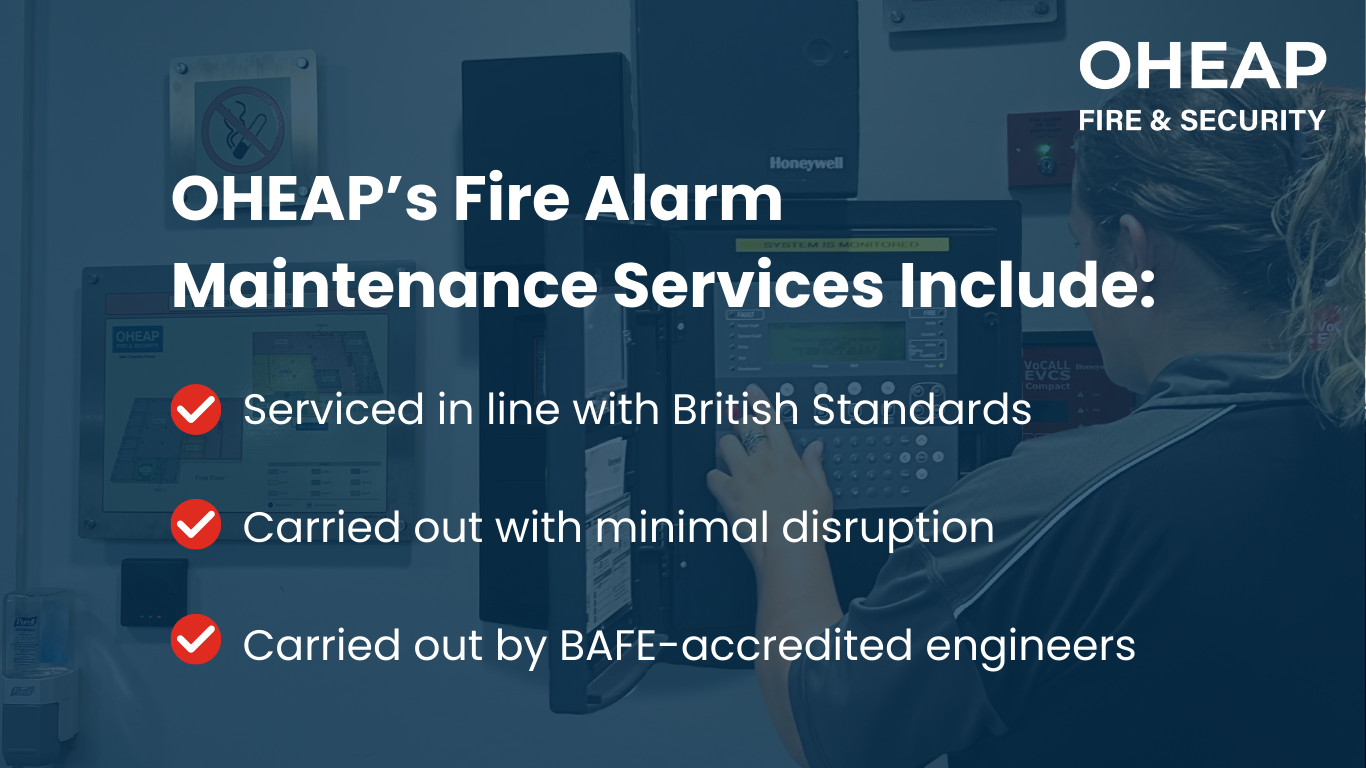
OHEAP’s Fire Alarm Services: Our expert engineers provide flexible fire alarm servicing, design and installation plans to suit all budgets and building needs.
Conducting Regular Risk Assessments – The breaches show how dangerous it is when property owners don’t fully understand their building’s fire safety needs. A simple way to correct this is through FRAs. Fire risk assessments help identify these risks and ensure systems match the building and its occupants.
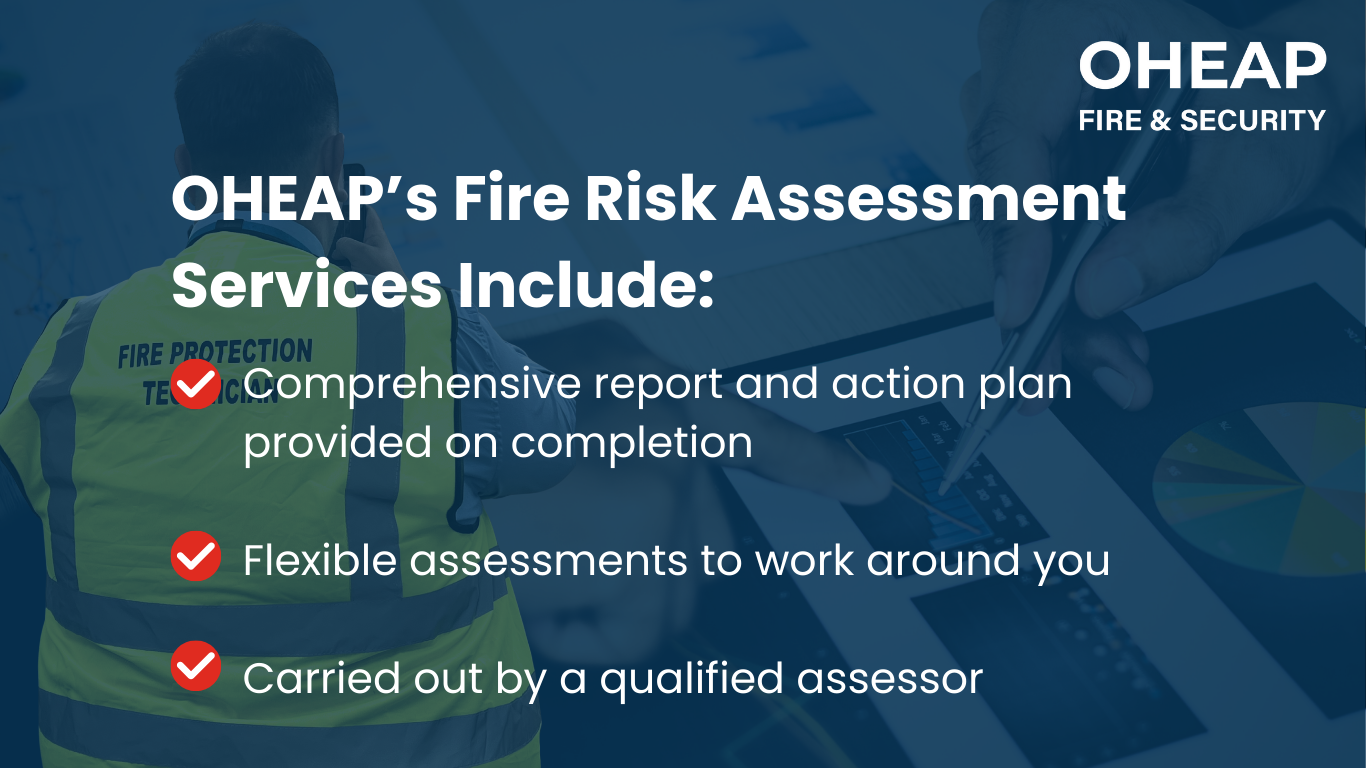
OHEAP’s Fire Risk Assessment Services: Our accredited assessors provide fire risk assessments to all types of buildings. Our assessors also follow the BS 8674:2025 competency framework to deliver reliable, professional assessments.
What Are the Fire Alarm Regulations in the UK?
Another key aspect of the recent case was the failure to maintain their fire alarms within the standards detailed under the Regulatory Reform (Fire Safety) Order 2005 and the Fire Safety Act 2021. But what do these acts entail and how do they affect fire safety equipment? Let’s explore them.
- Risk Assessment First: Every building needs regular fire risk assessments by a competent professional to identify safety hazards and equipment needs.
- Suitable Fire Detection and Warning System: Every non-domestic building needs a fire alarm system that can detect fire quickly and warn all occupants in enough time for safe evacuation.
- Compliance with British Standards: There is no set type of fire alarm to be installed. However, the equipment should be sufficient to match the property. A fire risk assessment can help identify the level of fire protection needed through equipment.
- Maintenance and Testing: Fire alarms must be maintained in good working order. To achieve this, regular testing and servicing (often weekly user tests and annual professional servicing) are needed.
- Consideration of Building Use and Risk: Fire alarm systems must be adapted to protect the fire safety needs of the building and the building occupants. Factors that impact the design and installation of fire safety equipment include: Building size and layout, number of occupants, purpose of the space and considering the fire risks present.
Why Are Fire Alarms Important?
Fire alarms are important for audibly alerting people to potential danger.
When a triggered fire alarm sounds, it creates extra time to react. In environments with vulnerable people, like care homes, schools, or hospitals this extra time is vital.
How Often Should Fire Alarms Be Tested?
Fire alarm systems require both simple weekly tests and professional fire alarm servicing to maintain their quality.
Without regular testing, fire alarms can fail. But with busy schedules, it can be easy to forget to test your alarms. The solution? Test it Tuesday. Testing your fire alarm every Tuesday means you don’t wait until the end of the week only to discover it isn’t working (and panic over the weekend!). Instead, you test your fire detectors early on and have plenty of time to fix any issues.
Why Are Fire Risk Assessments Important
FRAs are an essential fire safety step. By conducting one you:
- Identify fixable gaps in your building’s fire safety.
- Gain a clear step-by-step guide of remedial action to take to improve your building’s fire safety.
- Ensure your building is safe and compliant.
If you are the Responsible Person with the duty to maintain fire safety via regular FRAs, this might seem like a daunting task. Luckily, you aren’t alone. At OHEAP, our team of accredited assessors work across the Midlands to provide fire risk assessments held to the highest standards as detailed in the BS 8674:2025
Is a Fire Risk Assessment a Legal Requirement?
Yes, fire risk assessments are a legal requirement for non-domestic properties in the UK. They are an essential part of the Regulatory Reform (Fire Safety) Order 2005.
How Often Should a Fire Risk Assessment be Reviewed?
Fire risk assessments should be reviewed annually. However, we recommend more regular risk assessments to take place to combat any changes in building occupants or equipment.
The more regularly a space undergoes a fire risk assessment, the less likely it is to breach any fire safety regulations.
Conclusion – Building Long-Term Fire Safety
The Fylde Fire Systems case is a key reminder of the costly consequences fire safety failures can have on businesses. Luckily, it also reveals how preventable these mistakes are.
With OHEAP’s accredited fire alarm services and fire risk assessments, you can protect your residents, stay compliant, and avoid the risks of fire or fines.