
Fire Protection
Fire Suppression Systems
Request a Call Back - Fire Suppression
A fire suppression system is an active fire protection measure and is commonly used in kitchens, server rooms and other critical infrastructure areas. They consist of a purpose-designed pumping system which uses special gases and/or liquids to suppress fires.
Once the suppression system’s automatic detection devices have detected a fire, the pump is activated. After that, either water or foam is expelled through hoses to extinguish the flames.
What We Offer
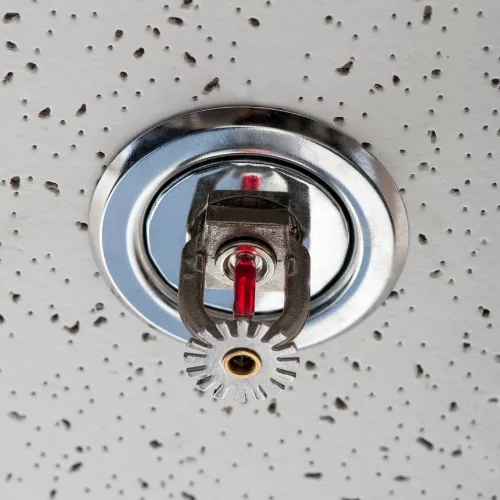
Fire Suppression System Design
If you’re looking to have a fire suppression system installed on your premises, then our specialist fire suppression engineers can help. Our suppression system design will be completely bespoke to your premises as we carefully calculate the amount of extinguishing agent required for designated areas.
Designed specifically for your business
Designed in line with British Standards
Fire Suppression System Installation
When it comes to installing your new fire suppression or sprinkler system we’ll work around you. We’ll book your installation on a day that suits you and aim to install it discreetly with minimal disruptions to your business. Our engineers are accredited to British Standards, so you can be sure of a quality and professional service.
Installed to British Standards
Carried out with minimum disruption
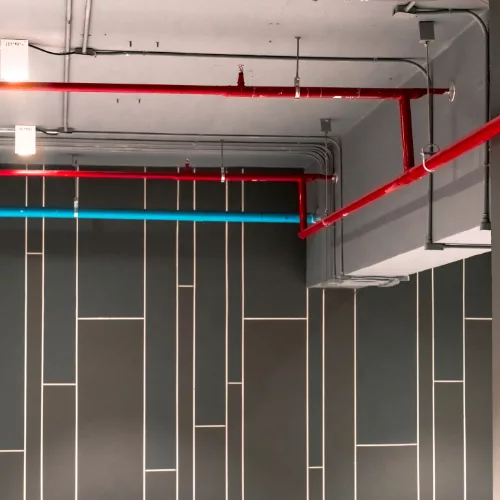
Fire Suppression Servicing
Once you have a fire suppression system installed, you will need to ensure it is serviced regularly to guarantee it will work in the event of a fire. Our team will come and service every working element of your suppression system. Dust or grease could hamper your suppression system’s efficiency.
Serviced inline with British Standards
Carried out with minimum disruption
Room Integrity Testing
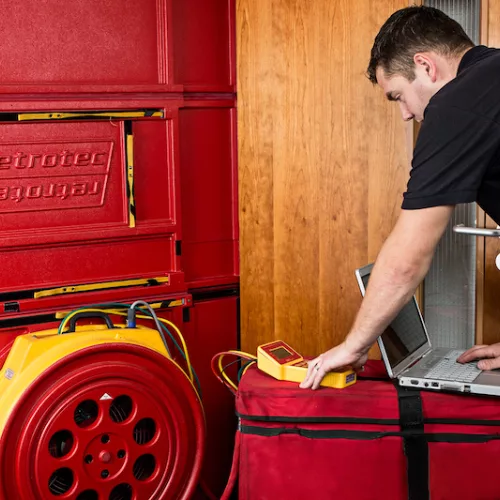
Room integrity testing is critical for any suppression systems. They need to be able to achieve the correct concentration within a room and remain at that level for a specific amount of time. If they do not comply, they will cease to have maximum efficiency in the event of a fire. To ensure a room has no leakage points, a full room integrity test is a critical part of maintaining a fire suppression system.
Carried out by qualified engineers
Carried out to British Standards
Carried out with minimum disruption
Frequently Asked Questions
How Often Does My Suppression System Need Servicing?
British Standards state that your fire suppression system is serviced regularly by a competent person. We recommend that you get your suppression system serviced once a year.
What Is A Sprinkler System?
Sprinkler systems are also known as water mist. We use these to distribute very small droplets of water to create the maximum cooling effect on the fire.
These are based on the well-established principles of hydraulic technology.
- Firstly, the water is stored in tanks or cylinders and pipes take the water to areas where it might be needed.
- Secondly, spray heads will discharge the water in the form of water mist.
- Thirdly, the tiny droplets create a large effective cooling surface area of the fire and surrounding volume.
- Lastly, the high speed of the droplets means they can penetrate the hot fumes and reach the combustion area. If water is unsuitable (usually due to its electrical conductivity) then a foaming agent may be added.
Sprinkler Systems Work in 3 Complementary Ways:
Cooling – Water spray in droplets of micron size produces a large surface area for heat absorption. Once in contact with hot bodies and gases, these droplets turn to vapour. Finally, absorbing a large quantity of heat equivalent to 540 calories per gram.
Smothering – The water in its vapour state occupies 1600 times more volume than a liquid. It displaces an equivalent volume of oxygen, thus creating a smothering effect. However, if both the water vapour generated and the temperature in the hazard are high enough, the concentration of oxygen can fall drastically in the whole room.
Attenuation – The mist cloud generated in the enclosure absorbs a large part of the radiated heat, thus protecting the adjoining risks.
What Is A CO2 Fire Suppression System?
Carbon dioxide systems has been used in fire fighting for over 50 years. It is generally specified in locations where people will not be working since it is hazardous to humans in the concentrations deployed by fire suppression systems.
Since there are no chemical residues left after use, CO2 systems are suitable for food industries and other situations where contamination is to be avoided. A further advantage is a low cost of refilling the storage cylinders.
CO2 physically extinguishes fires in two ways. Firstly, it decreases the oxygen level in the enclosure to below the level where combustion can be sustained. Secondly, the gas absorbs heat and cools the fire down.
When handling fire protection in small areas we need to take stricter precautions. If carbon dioxide is inhaled it may lead to asphyxia. This is still true even if at very low dosages.
CO2 extinguishants have been effectively used for over 50 years. This is often to protect areas with electrical fire hazards. Transformer rooms, generator enclosures and electrical hazards are just a few of the areas you may find a CO2 extinguisher.
What Is A Synthetic Fire Suppression System?
Synthetic gas fire suppression systems will store the extinguishing agent as a liquid. Once filled the contents are super pressurised with nitrogen. Due to the final agent taking less space in the cylinder any contents expelled will mean that clearing up after a fire is relatively straightforward.
The synthetic gases used are approved for Class A and Class B fires. We recommend them for critical risk areas and occupied areas. This includes computer centres, gas turbine enclosures, power stations and data storage sites. Basically, synthetic systems are installed around the world in a variety of locations.
What Is An Inert Fire Suppression System?
What type of fire suppression system you need will depend on a number of different risk factors unique to your business. Your fire risk assessment will outline these risk factors and inform you of what extinguishers you need and how many. If your still unsure our Fire Protection Consultants will be able to help you.
Accreditations
We work with several third-party bodies to ensure we work to the highest industry standards.

Get A Quote
PAGE: Fire Suppression
Fire and Security System Insights
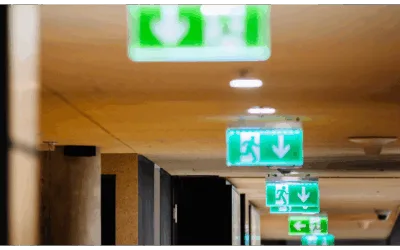
School Emergency Lighting | Fire Safety Guide
School emergency lighting is a UK legal requirement under the Regulatory Reform (Fire Safety) Order 2005, supported by British Standard BS 5266. The purpose of emergency lights in schools is to: Protect students and staff during blackouts. Illuminate guidance towards...
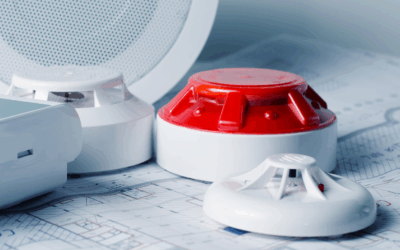
The Consequences of Breaching Fire Safety Standards
A fire alarm engineering company was recently investigated after failing to meet fire safety standards in a care home. Their breaches of the Regulatory Reform (Fire Safety) Order 2005 led to costly fines which were exacerbated by care homes now being considered...

A Guide for Fire Risk Assessors | Understanding BS 8674:2025
In January 2025, the British Standards Institution (BSI) published BS 8674:2025, a new fire safety standard that defines a clear competency framework for fire risk assessors in the UK. For the first time, fire risk assessors have a nationally recognised benchmark to...

OHEAP Supports the Next Generation of Trades at Derby College
OHEAP has strengthened its ongoing partnership with Derby College by hosting a series of workwear events at the college’s Stevenson Building. The sessions, which ran over three weeks, were designed to support students across engineering, building services,...
CCTV Security Systems: Your Questions Answered
At OHEAP, we understand that knowing where to start with investing in CCTV security systems can seem challenging. Especially when different buildings may require unique security solutions. Knowing where to start with choosing your CCTV system can also raise important...
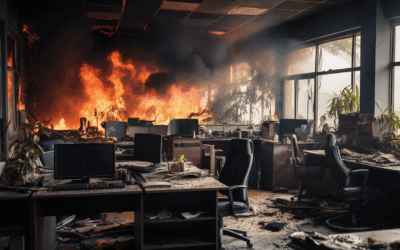
Fire Safety | A Legal Duty, A Moral Obligation
Fires can be unpredictable. They can ignite quickly and spread rapidly – leading to the devastating destruction of both people and property. Under the Regulatory Reform (Fire Safety) Order 2005, business owners, have both a moral and legal responsibility to protect...