
Fire Protection
Fire Risk Assessment
Book your annual assessment today and make sure you have your fire risk management strategy in place to remain fully compliant. Safety is paramount.
Request a Call Back - FRA
If you’re running a business, one of the most important parts is keeping everyone safe. The best place to start is to carry out and regularly review a fire risk assessment.
At OHEAP Fire & Security, we provide comprehensive Fire Risk Assessments to businesses, landlords and individuals, helping them to take the appropriate steps to prevent fires and injuries.
With an OHEAP fire safety and risk assessment, you’ll know exactly what your fire risks are and how to manage them.
What We Offer

Fire Risk Assessments
Our comprehensive assessments identify and assess the potential risks that may arise within your building. Helping you to identify areas in which your policies and procedures may need improvement. Additionally, we can identify any fire safety precautions you should be following to keep visitors and employees safe. We follow the all the fire risk assessment steps required to provide you with a comprehensive assessment of the fire risks within your environment.
Comprehensive report and action plan provided on completion
Flexible assessments to work around you
Carried out by a qualified assessor
Actionable Report
Following your assessment visit from our assessor, you will receive a comprehensive action plan, completely free of charge.
This document will highlight any critical, advisory and general observations. Critical points should be actioned and corrected immediately as they pose danger to life in the event of a fire. But don’t worry, our fire action plan will explain the issue in detail and provide remedial actions you can take to mitigate the risk identified.
The advisory points in the report will show you where there are areas you can improve fire safety but they are not critical at this stage.
If you have any questions about anything highlighted in your report, you can discuss with our fire safety consultants – free of charge. So you won’t be left alone to implement your fire safety strategy, we will be with you all the way.
The 5 Steps of a Fire Safety Risk Assessment
Have you been advised that you need a risk assessment to establish how you can manage your fire risks, but not sure what the process is?
Don’t worry, we have created a complete guide that explains the 5 steps to a fire safety risk assessment. We explain the process and what to expect from each of the fire risk assessment steps.
Our guide also covers ignition sources which can be eliminated or removed to reduce the risk of fire in your premises. We also cover some of the main fire safety measures you could consider to help you create a safer environment.
Downloadable Guide

Frequently Asked Questions
How Often Should A Fire Safety Risk Assessment Be Reviewed?
Fire safety risk assessments are a legal requirement and should be reviewed annually. In addition, The Regulatory Reform (Fire Safety) Order 2005, requires a fire risk assessment to be reviewed if there are changes in the business. For example, structural alterations, change of building use and increase in occupancy. For this reason, a new fire risk assessment should be completed.
If you’re in need of an updated fire assessment or aren’t sure whether you are, get in touch. After that, one of our Fire Protection Consultants can answer all of your questions.
Who Is Responsible For Completing A Fire Risk Assessment?
In England and Wales, you may be responsible for fire safety and are known as the ‘responsible person’. Certainly, if you’re an employer, a person who has control of the premises or the owner of the building/business other than a single domestic dwelling.
Since October 2023, legal changes require all Responsible Persons of these types of premises to:
-
- record their fire risk assessment in full (previously only the significant findings needed to be recorded and only in specific circumstances); and
- record the identity of the individual (their name and/or if applicable, their organisation) engaged by them to undertake and/or review a fire risk assessment.
Additionally, all fire risk assessments for premises covered under the Fire Safety Order are required to be in writing. The previous requirement for a written fire risk assessment applied only when there were five or more employees.
In order to properly carry out the assessment, the assessor should have a minimum understanding of the following:
- Fire alarm system categories and design standards
- Emergency lighting design standards
- Fire extinguisher and fire safety sign and notice standards
- Fire risk guidance documents
- Current building regulations
- Effects of fire on people and behaviour of people in fire situations
- Means of escape
- Fire prevention
- Management of fire safety
- Subsequently, the assessment should be carried out by a suitably trained, qualified and experienced fire risk assessor.
At OHEAP Fire & Security, all of our Fire Risk Assessors are experts in their field and can take on the mantle of the “responsible person”. In conclusion, you can be confident that your assessment has been completed diligently and accurately.
Why Do I Need a Fire Risk Assessment
Your fire risk assessment of the premises ensures you stay compliant with fire safety laws, specifically article 9 of the Fire Safety Order. This will prevent you from facing prosecution from the fire and rescue service. And then there is the desire to keep people safe when they are in your premises.
The assessment is only the start though, the safety elements only really pecome apparent when you look at the report and create a fire risk management strategy. This is basically where you look to reduce all fire risks to as low as reasonably practicable.
Elements usually included in your action plan are;
- your evacutation plan and escape routes,
- your fire detection system and how frequently it requires servicing,
- the relevant fire suppression systems you may need to integrate into your environment,
- and your passive fire protection such as fire doors and emergency lighting.
Accreditations
We work with several third-party bodies to ensure we work to the highest industry standards.


Get A Quote
PAGE: Fire Risk Assessment
Fire and Security System Insights
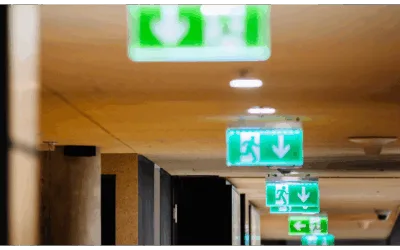
School Emergency Lighting | Fire Safety Guide
School emergency lighting is a UK legal requirement under the Regulatory Reform (Fire Safety) Order 2005, supported by British Standard BS 5266. The purpose of emergency lights in schools is to: Protect students and staff during blackouts. Illuminate guidance towards...
The Consequences of Breaching Fire Safety Standards
A fire alarm engineering company was recently investigated after failing to meet fire safety standards in a care home. Their breaches of the Regulatory Reform (Fire Safety) Order 2005 led to costly fines which were exacerbated by care homes now being considered...

A Guide for Fire Risk Assessors | Understanding BS 8674:2025
In January 2025, the British Standards Institution (BSI) published BS 8674:2025, a new fire safety standard that defines a clear competency framework for fire risk assessors in the UK. For the first time, fire risk assessors have a nationally recognised benchmark to...

OHEAP Supports the Next Generation of Trades at Derby College
OHEAP has strengthened its ongoing partnership with Derby College by hosting a series of workwear events at the college’s Stevenson Building. The sessions, which ran over three weeks, were designed to support students across engineering, building services,...
CCTV Security Systems: Your Questions Answered
At OHEAP, we understand that knowing where to start with investing in CCTV security systems can seem challenging. Especially when different buildings may require unique security solutions. Knowing where to start with choosing your CCTV system can also raise important...
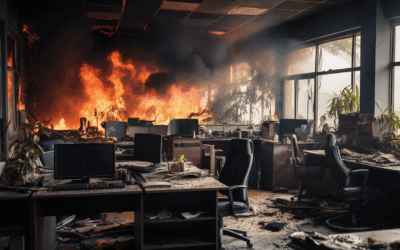
Fire Safety | A Legal Duty, A Moral Obligation
Fires can be unpredictable. They can ignite quickly and spread rapidly – leading to the devastating destruction of both people and property. Under the Regulatory Reform (Fire Safety) Order 2005, business owners, have both a moral and legal responsibility to protect...