
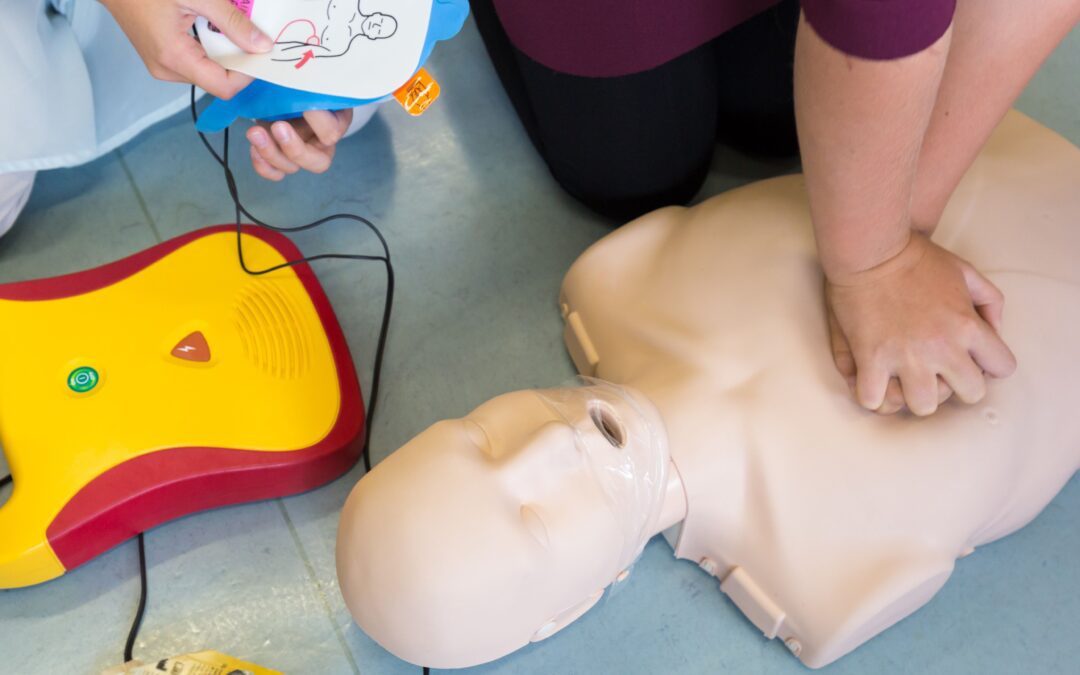
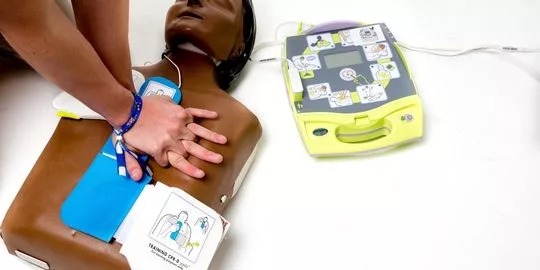
Automated external defibrillators, also known as AED, is a device used for CPR to help those experiencing cardiac arrest. Automated external defibrillators are small devices that deliver a shock through the chest when someone’s heart suddenly stops beating. The shock is designed to restore a normal heartbeat.
Unlike a heart attack, sudden cardiac arrest is a condition in which the heart suddenly and unexpectedly stops beating. During cardiac arrest, blood stops flowing to the brain and other vital organs.
Finally, if a person experiences sudden cardiac arrest, their chances of survival are best if they receive immediate CPR and shock from an AED. So it’s important to have AEDs available in public areas and offices.
How Do AEDs Work?
AEDs are automated external defibrillators. They’re small, portable devices that can be used to shock the heart back into a regular rhythm in an emergency situation. The AED will give you spoken instructions as you work and tell you if it’s safe to use them on the person or not, and what to do instead if not.
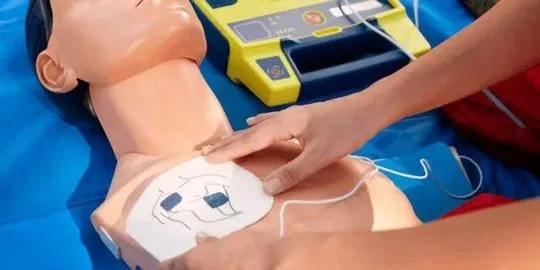
The innovative design of AEDs makes them simple for you in an emergency situation. The voice prompts will guide you through the process step-by-step and let you know when it’s time for another shock if needed. All AEDs have two sticky pads connected by a sensor that measures the heart rhythm and sends information about it through electrodes. You place the sticky pads on a patient’s chest; then press a button on the device in order to deliver a shock through those electrodes if necessary.
- Turn on the defibrillator (press the green button).
- Peel of the sticky pads and attach them to each side of the chest on the patient’s skin.
- Once the pads are attached, stop the CPR.
- Allow time for the defibrillator to check the patient’s heart rhythm.
- If instructed, press the shock button.
- Avoid touching the patient when they are being shocked.
- The AED will inform you if the shock was delivered and provide further instructions.
- Continue with chest compressions until told otherwise by the defibrillator.
Training To Use AEDs
The AED then guides users through CPR until paramedics arrive on the scene and takes over treatment from there.
You may be surprised to learn that AEDs are designed to be used by anyone and that they’re actually pretty easy to use. In fact, most AEDs have a voice-over feature that allows you to listen along with the instructions. However, training is highly recommended and can be offered by many health organisations.
Additionally performing basic CPR can save someone’s life. CPR is the combination of chest compressions and artificial ventilation. Chest compressions are done to keep blood flowing to the brain and other vital organs until medical help arrives.
Don’t be afraid to call 999 for help immediately, even if you’re unsure about whether or not someone needs CPR. Your instincts are probably correct.
Click here for fire safety training.
Click here for St John Ambulance AED Training
Where Are AEDs Kept?
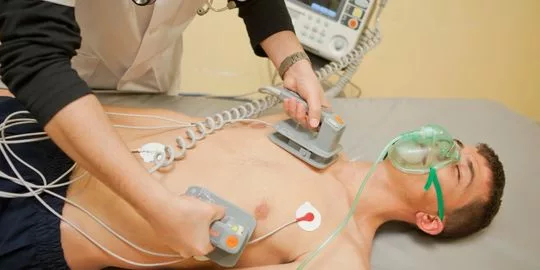
AEDs should be stored in areas where people congregate, like fitness centres, schools, and places of work. In fact, many businesses and organisations have installed them in their offices, gyms, airports and other public spaces where people congregate. These areas are often near the front desk where someone can quickly get to it if someone needs help.
If you’re looking for a way to help save lives, AEDs are a great place to start. They’re easy enough for anyone to use and they can save lives when it matters most.
Checking A Heart Rhythm
Automated external defibrillators are portable devices that check heart rhythm. Additionally, it detects a shockable heartbeat, it can send an electric shock to the heart. Basically in an attempt to restore a normal rhythm.
Though extremely lightweight, these devices can stop irregular heartbeats and allow normal heartbeats to resume.
Automated external defibrillators have a built-in computer that checks a heart rhythm through adhesive electrodes. Secondly, if defibrillation is needed, a recorded voice prompts the rescuer to press the shock button, thus stunning the heart into a regular heartbeat.
Lastly, automated external defibrillators have become increasingly common in public places such as airports, stadiums and other venues where large crowds gather. They’re also found in workplaces where employees risk potential cardiac arrest during strenuous activities like construction work or landscaping projects.
The Difference Between AED And A Defibrillator
An AED is not the same as a defibrillator. AEDs are portable, while defibrillators require electricity and have to be connected to an electrical outlet. A defibrillator is a device used in emergency rooms and hospitals.
Automated external defibrillators are easy to use and can be used in a variety of settings, but they do require training before they can be used on patients. The device will analyse heart rhythm and give instructions on how to proceed if needed, based on the severity of heart attack symptoms seen by the patient (i.e., breathing or not breathing).
Conclusion
AEDs are a great tool to improve the odds of survival in people who have sudden cardiac arrest. They’re easy to use and can be found in many public places, but they can only help if someone is nearby when an emergency occurs and if they know how to operate them properly.
CPR should always be performed while waiting for help or even after using an AED on someone who doesn’t respond.